Configuration
This section guides you through changing your PostgreSQL cluster configuration.
- Console (UI)
- Command line
Click the name of your cluster on the Clusters page, then open the Parameters tab to view and edit cluster settings.
Cluster
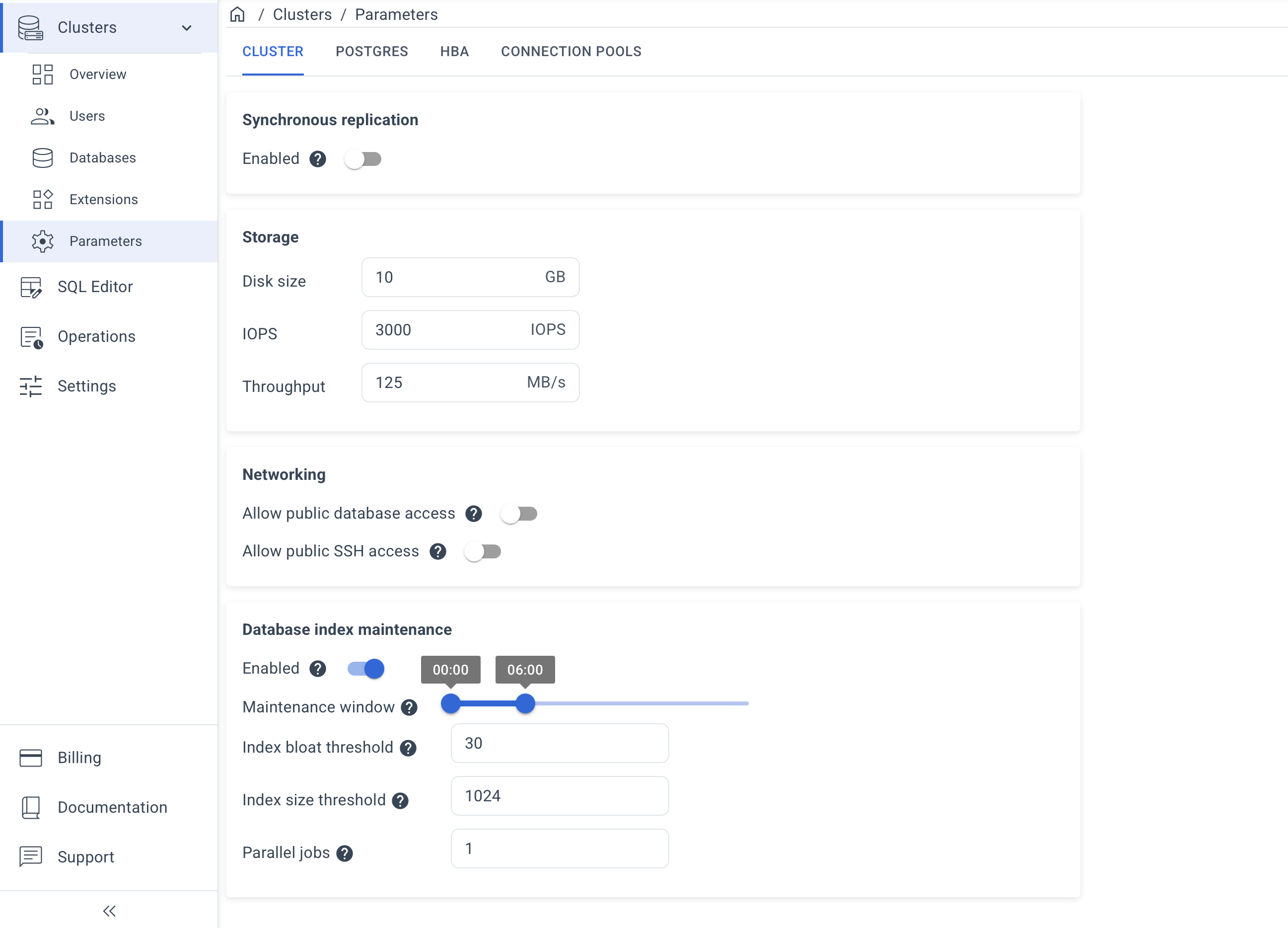
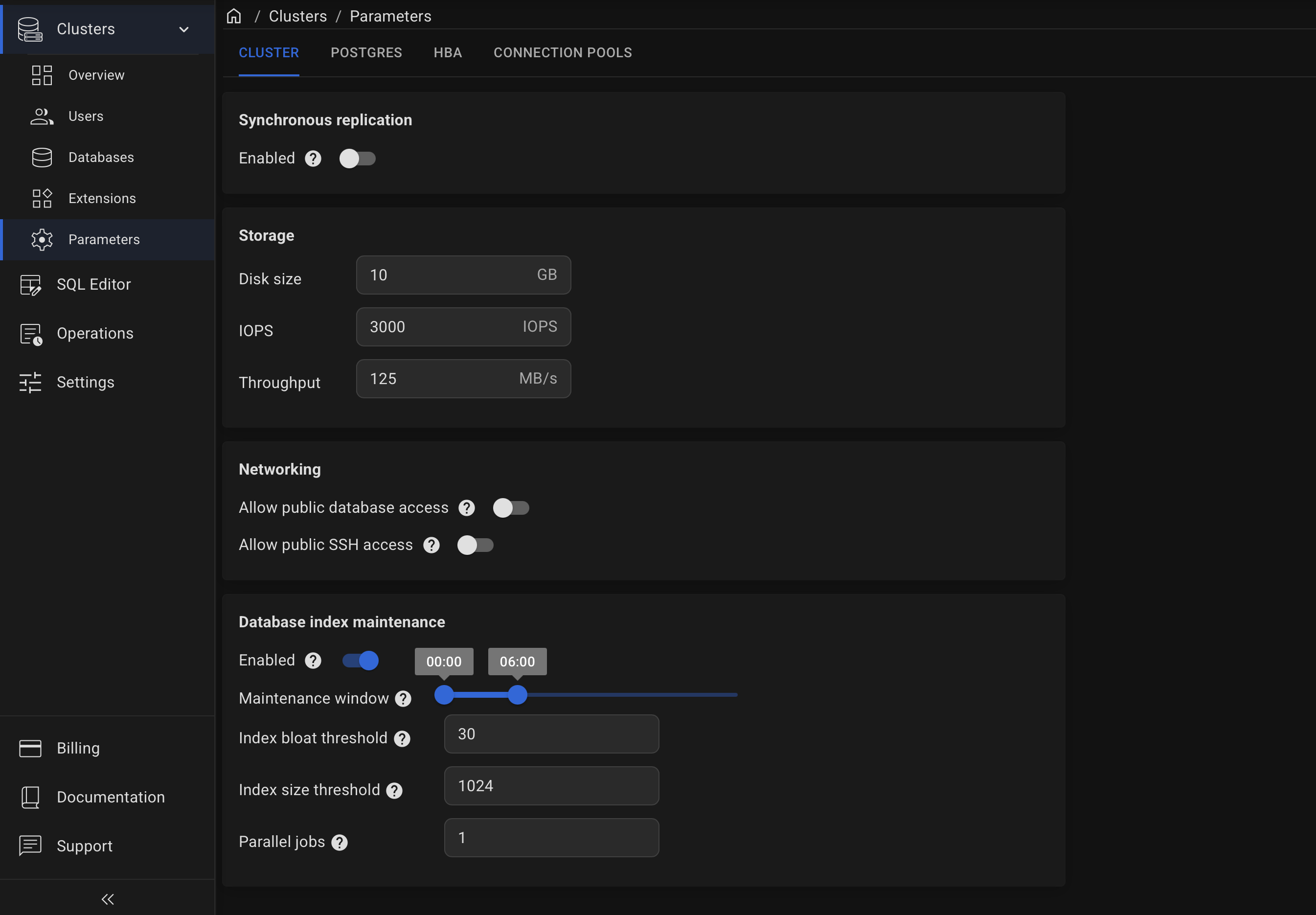
View and modify general cluster settings such as synchronous replication, disk size, IOPS, throughput, networking options, and the index maintenance.
Postgres
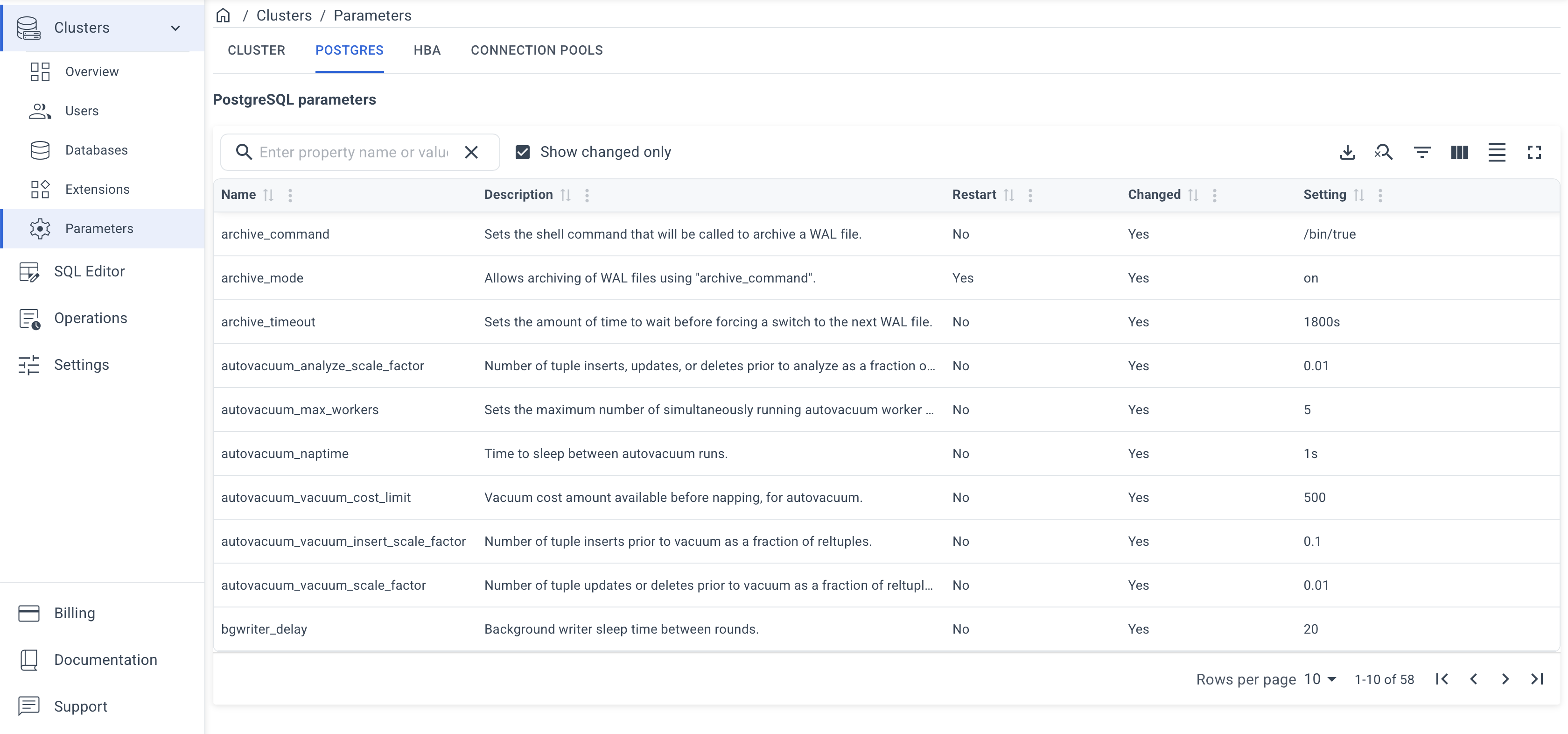
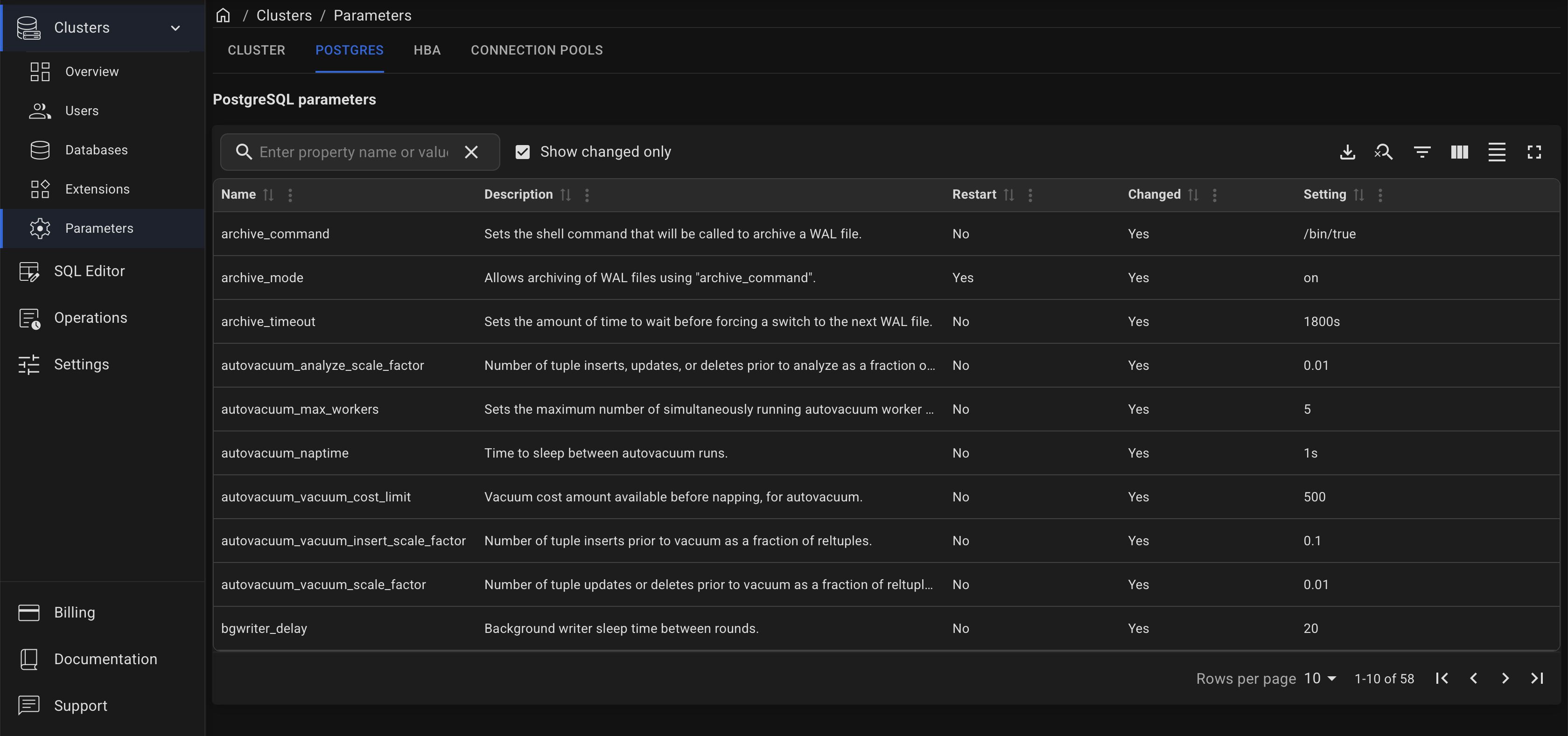
Configure PostgreSQL-specific runtime parameters (for example, autovacuum settings, WAL and checkpoint behavior, memory-related parameters). Use the search and filters to find parameters and review which settings require a restart.
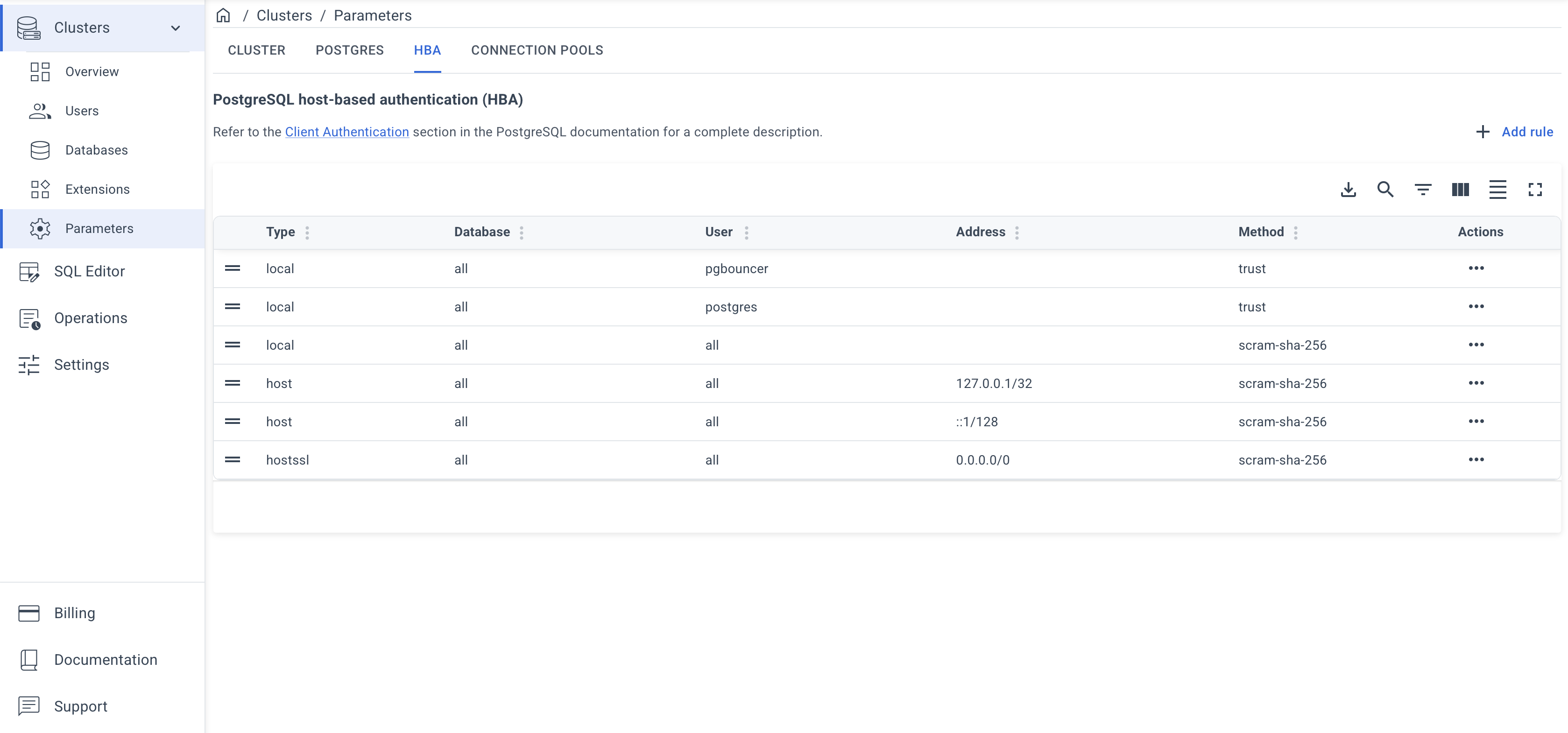
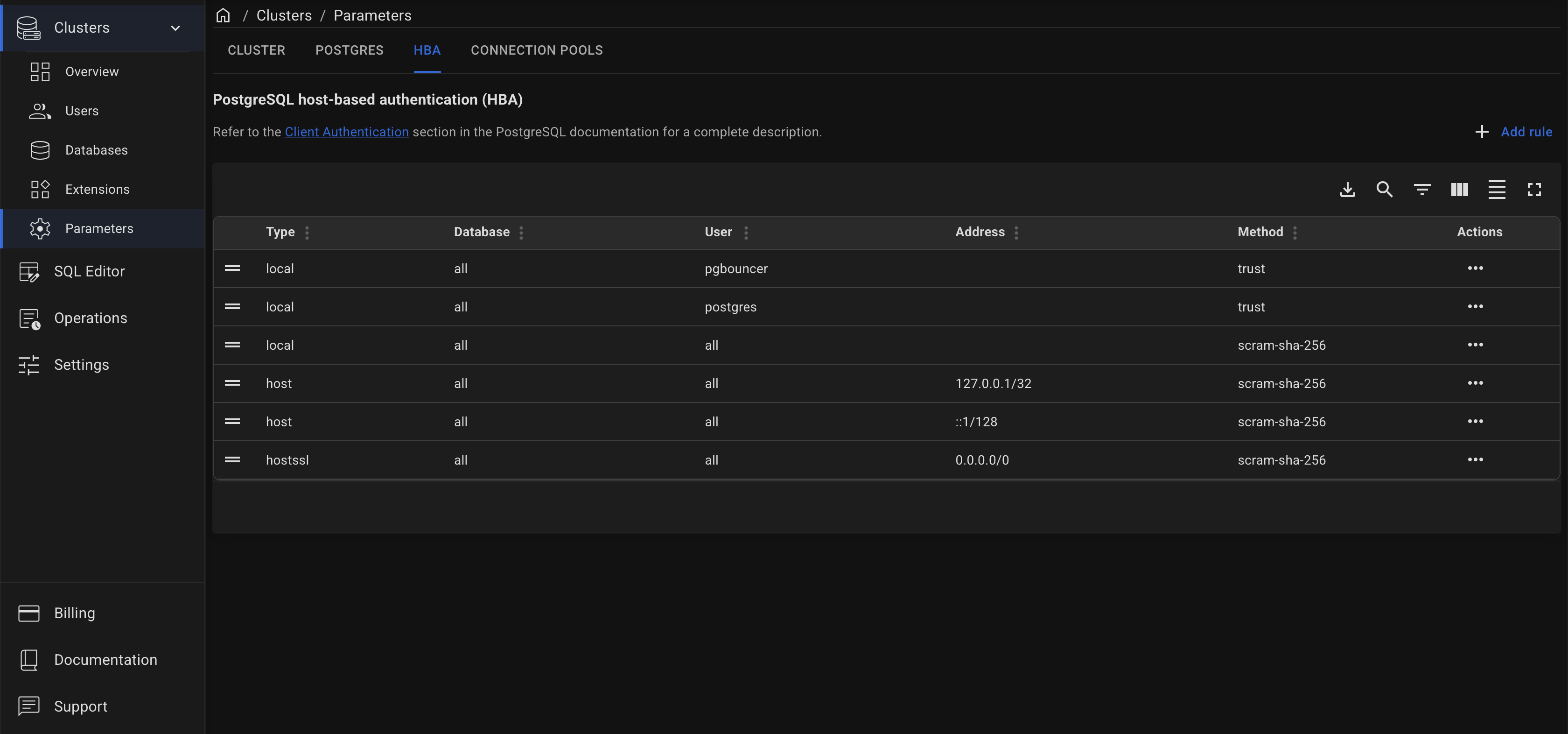
HBA
Manage PostgreSQL host-based authentication (HBA) rules. Add, edit, or remove rules that control which hosts and users can connect and which authentication methods are enforced.
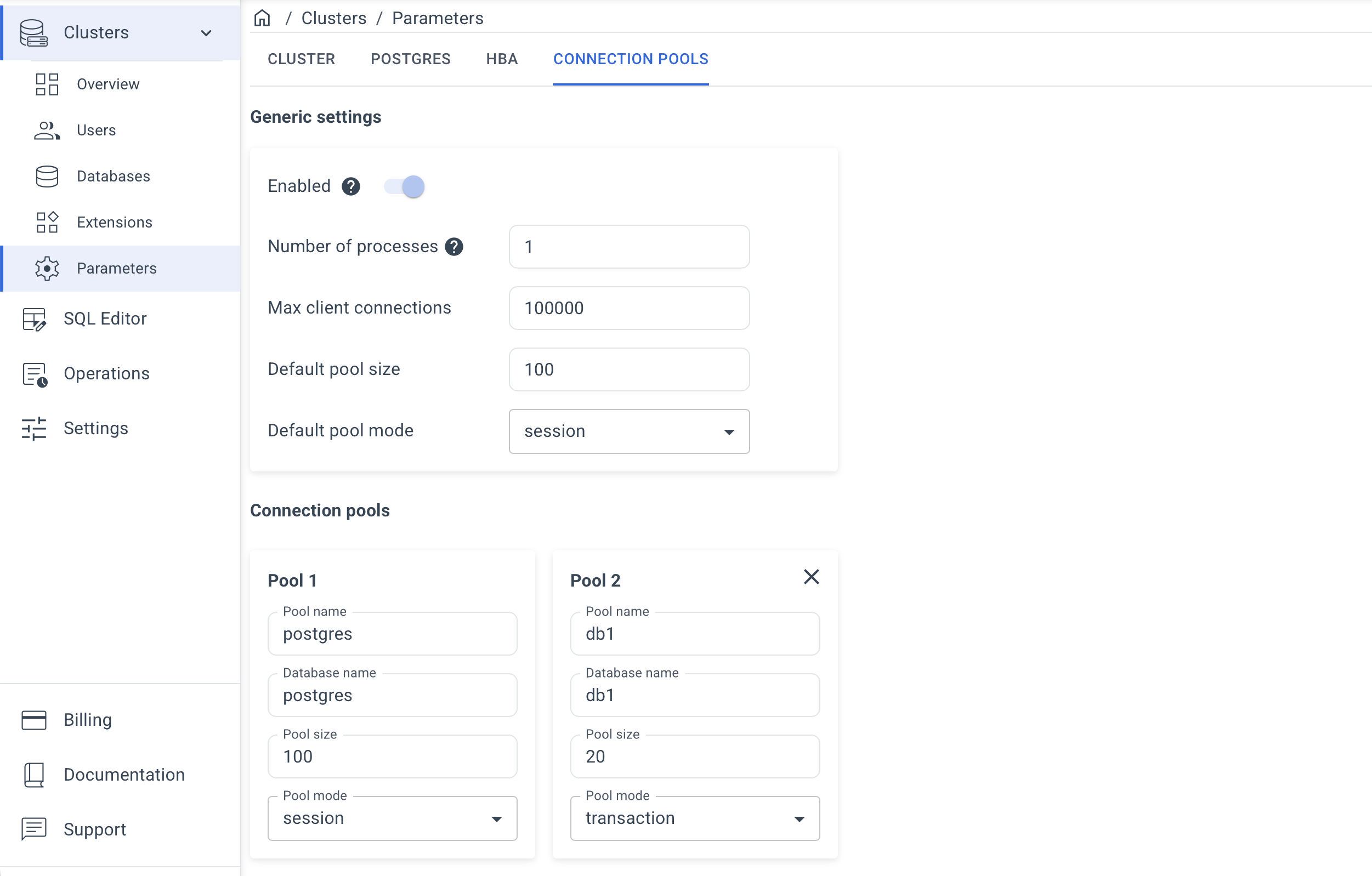
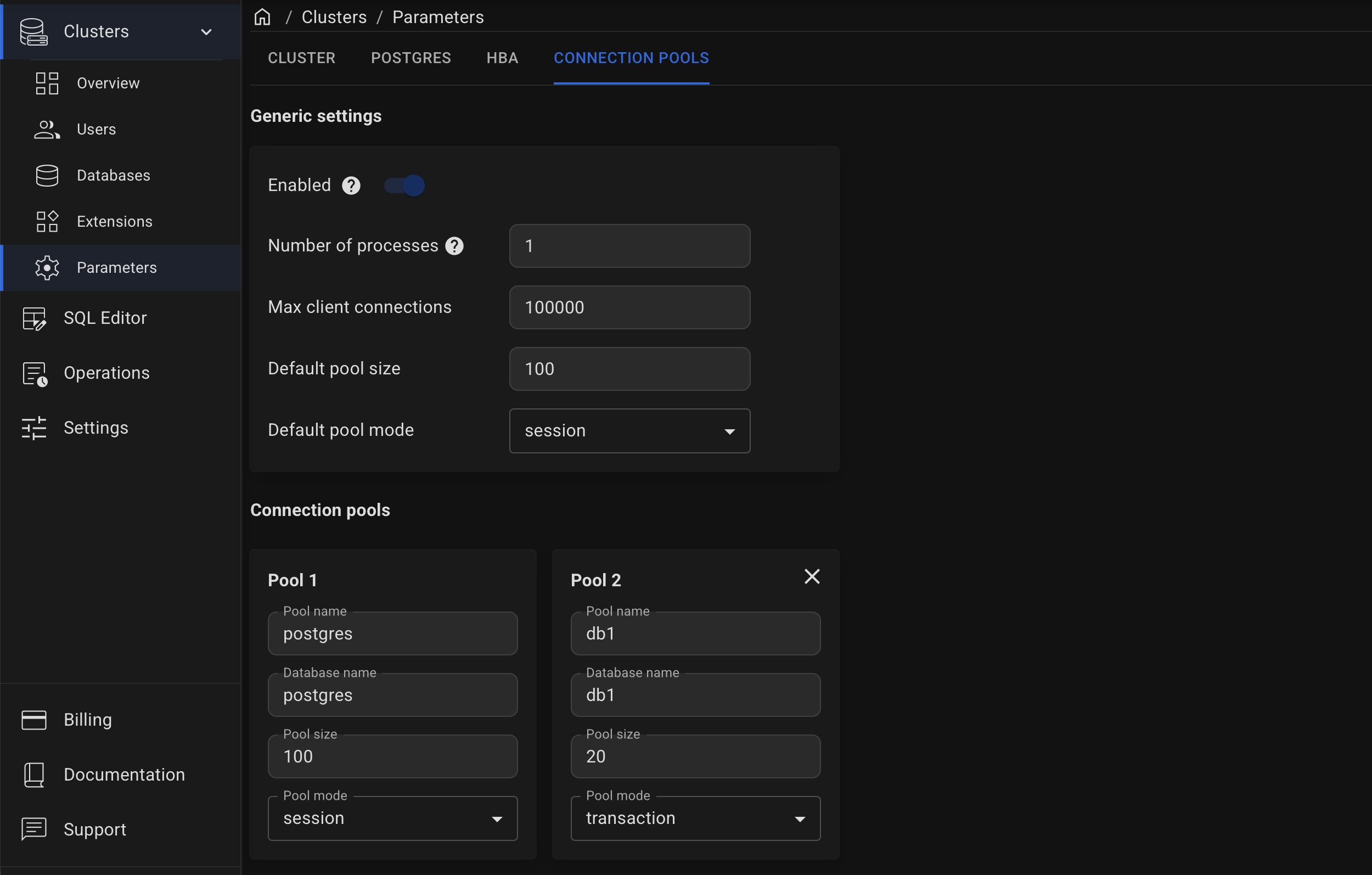
Connection Pools
Configure connection pool settings and individual pools. Set pool counts, pool modes, max client connections, and per-pool parameters to control how client connections are multiplexed.
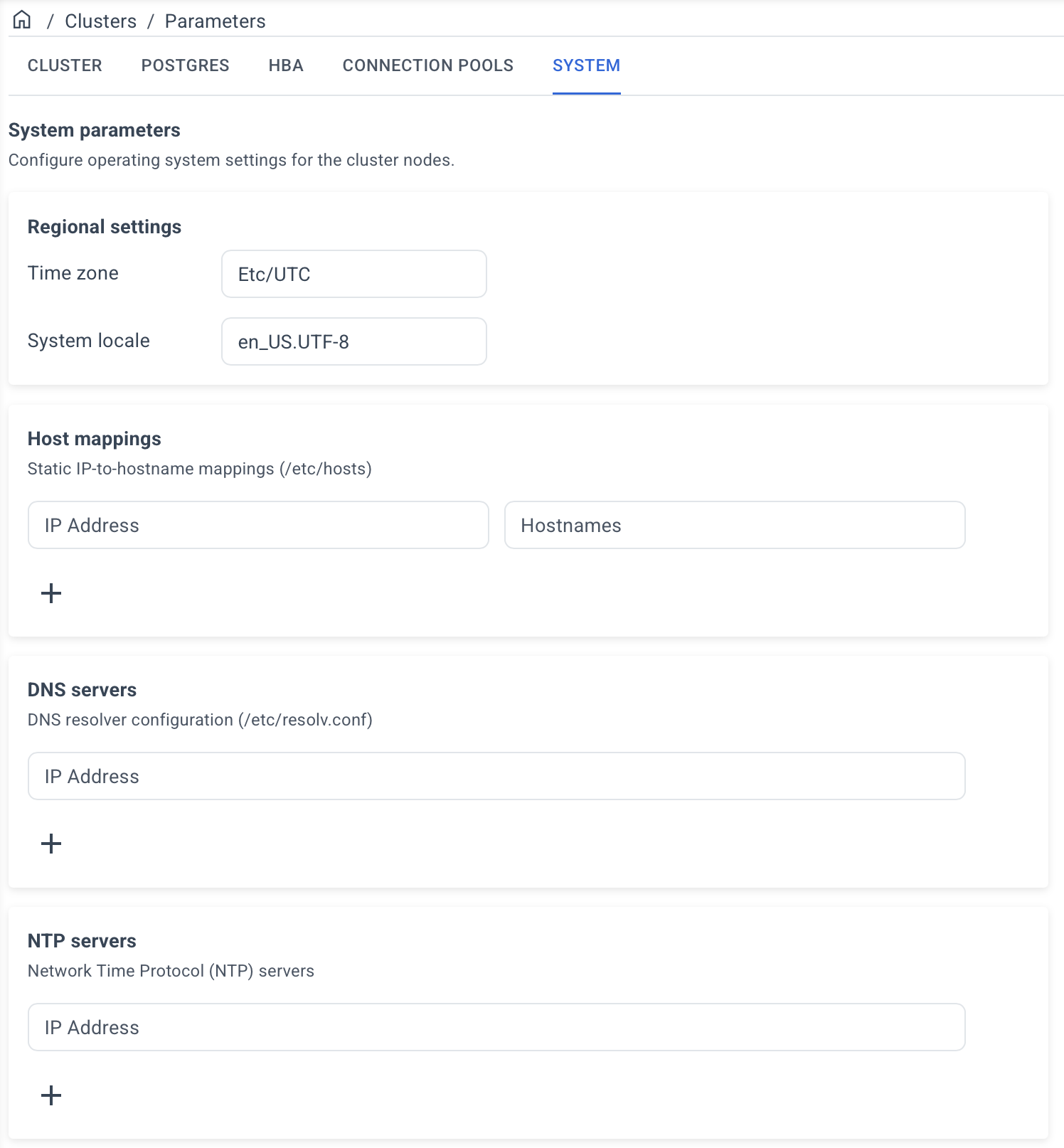
System
The System tab is available when Expert Mode is enabled. To enable it, go to the Settings page and turn on “Enable expert mode”.
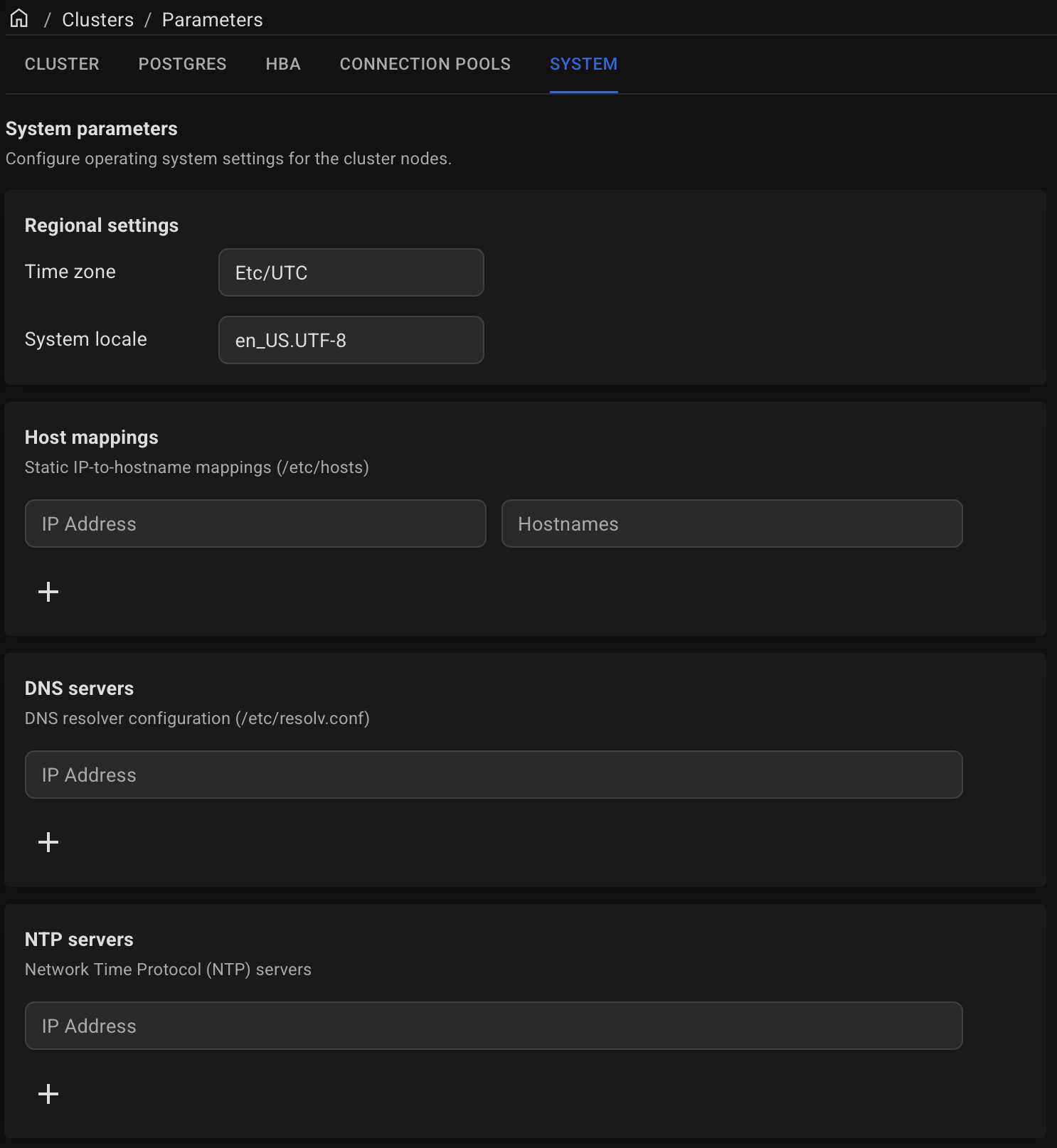
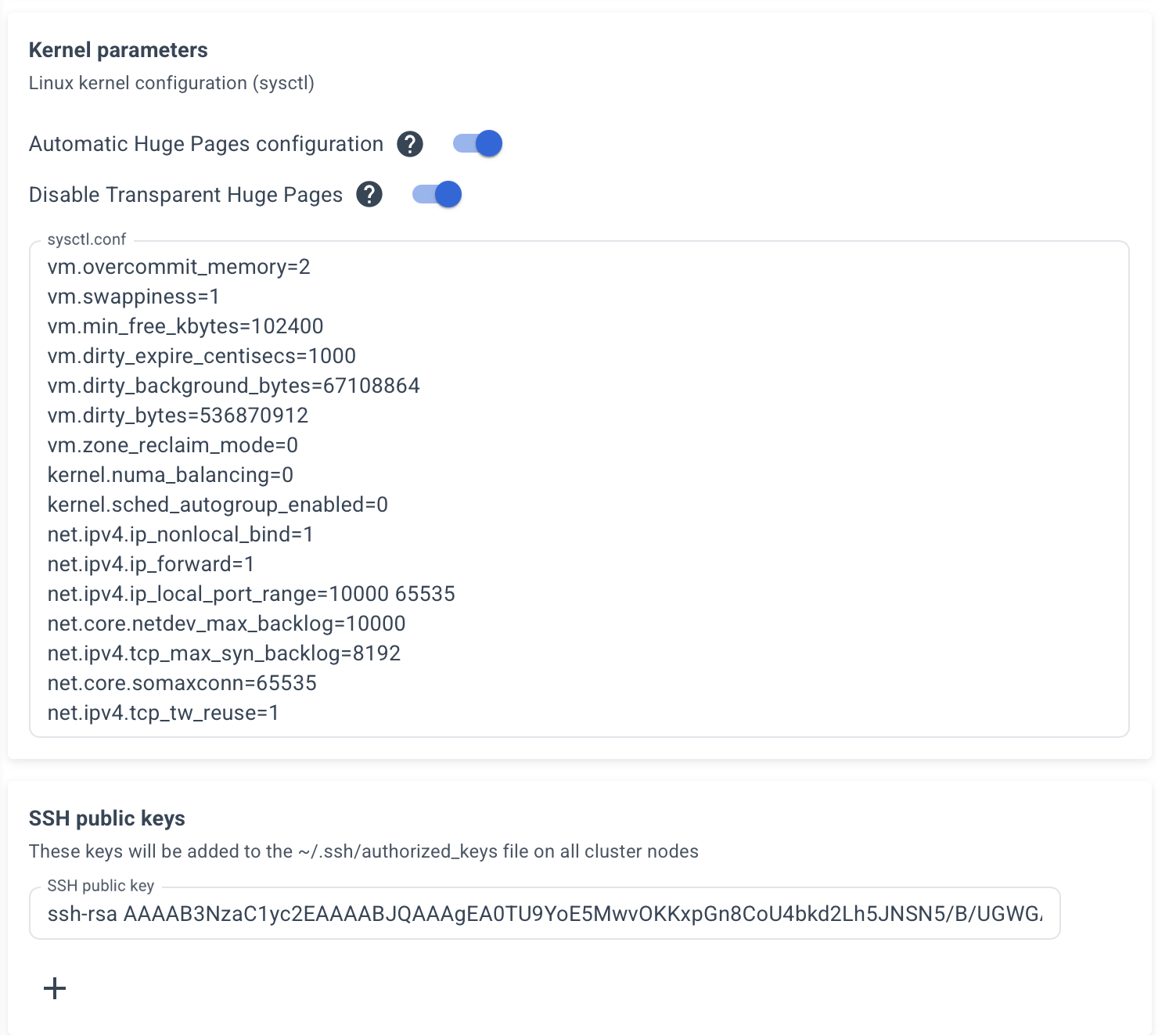
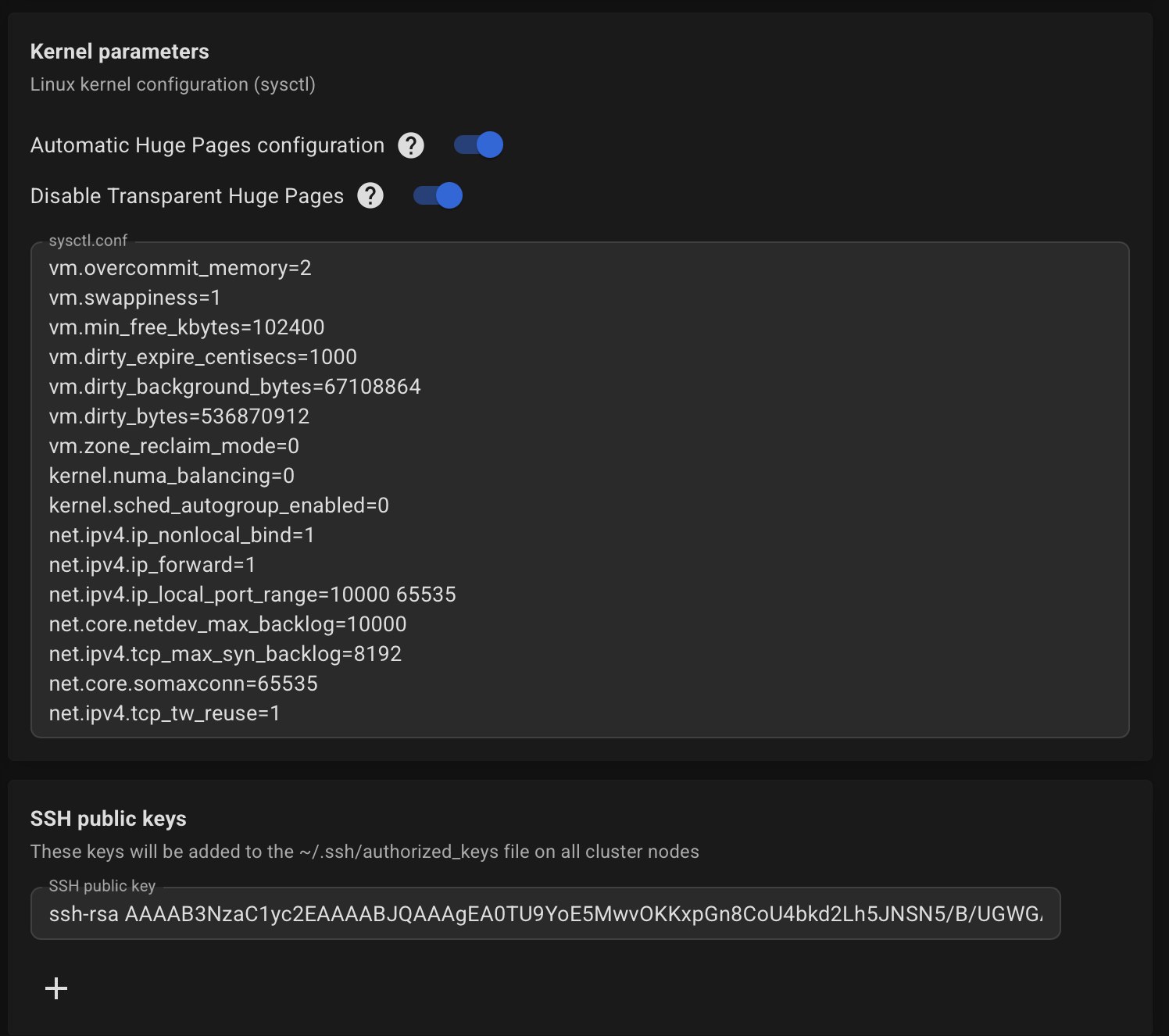
Edit the advanced system configuration, including Regional Settings, Host Mappings, DNS Servers, NTP Servers, Kernel Parameters, and SSH Public Keys.
YAML Editor
To use the YAML editor, go to the Settings page and turn on “Enable expert mode” and “Enable YAML editor”.
The YAML editor allows experienced users to configure any available options. Refer to the defaults.
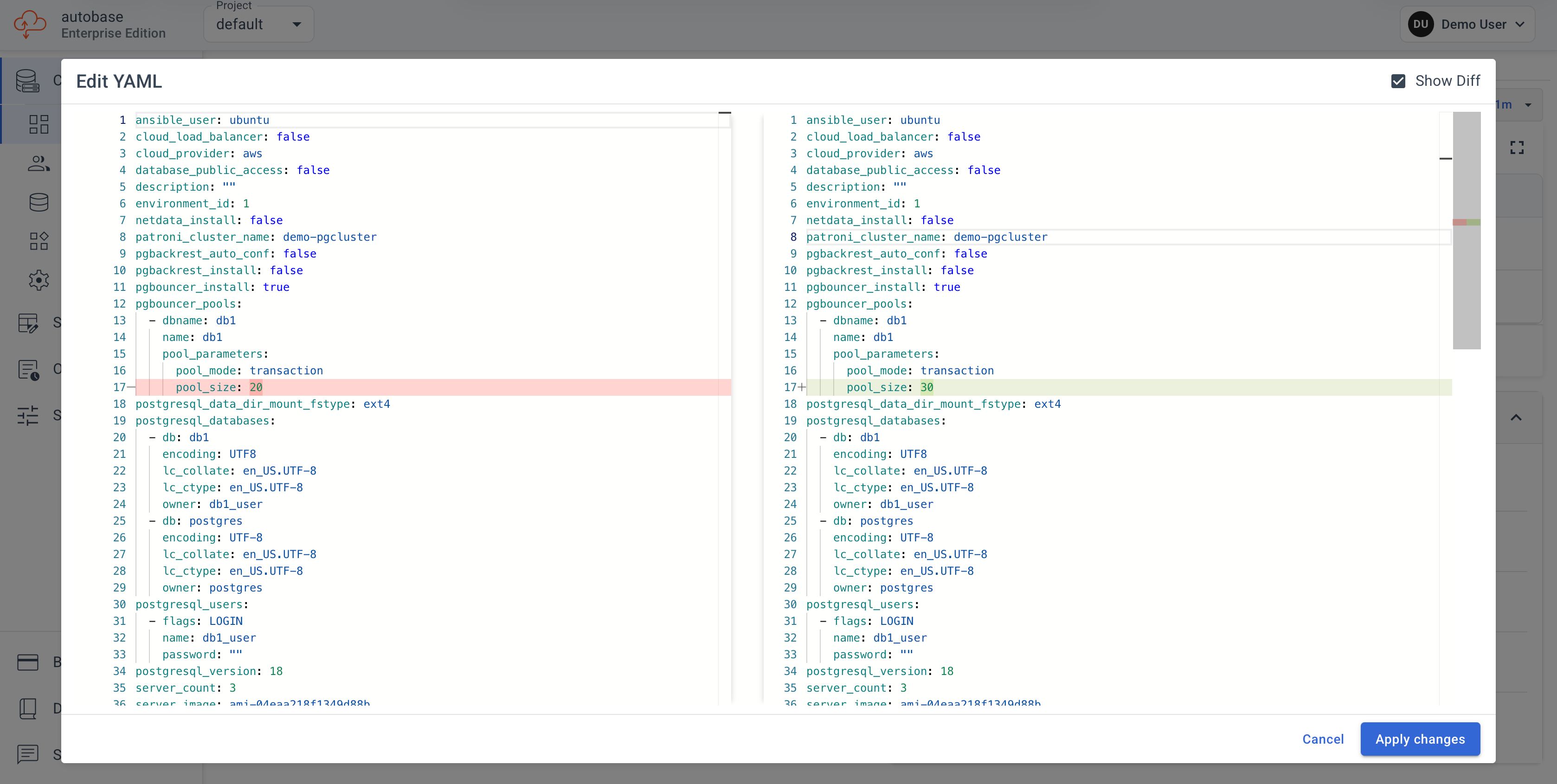
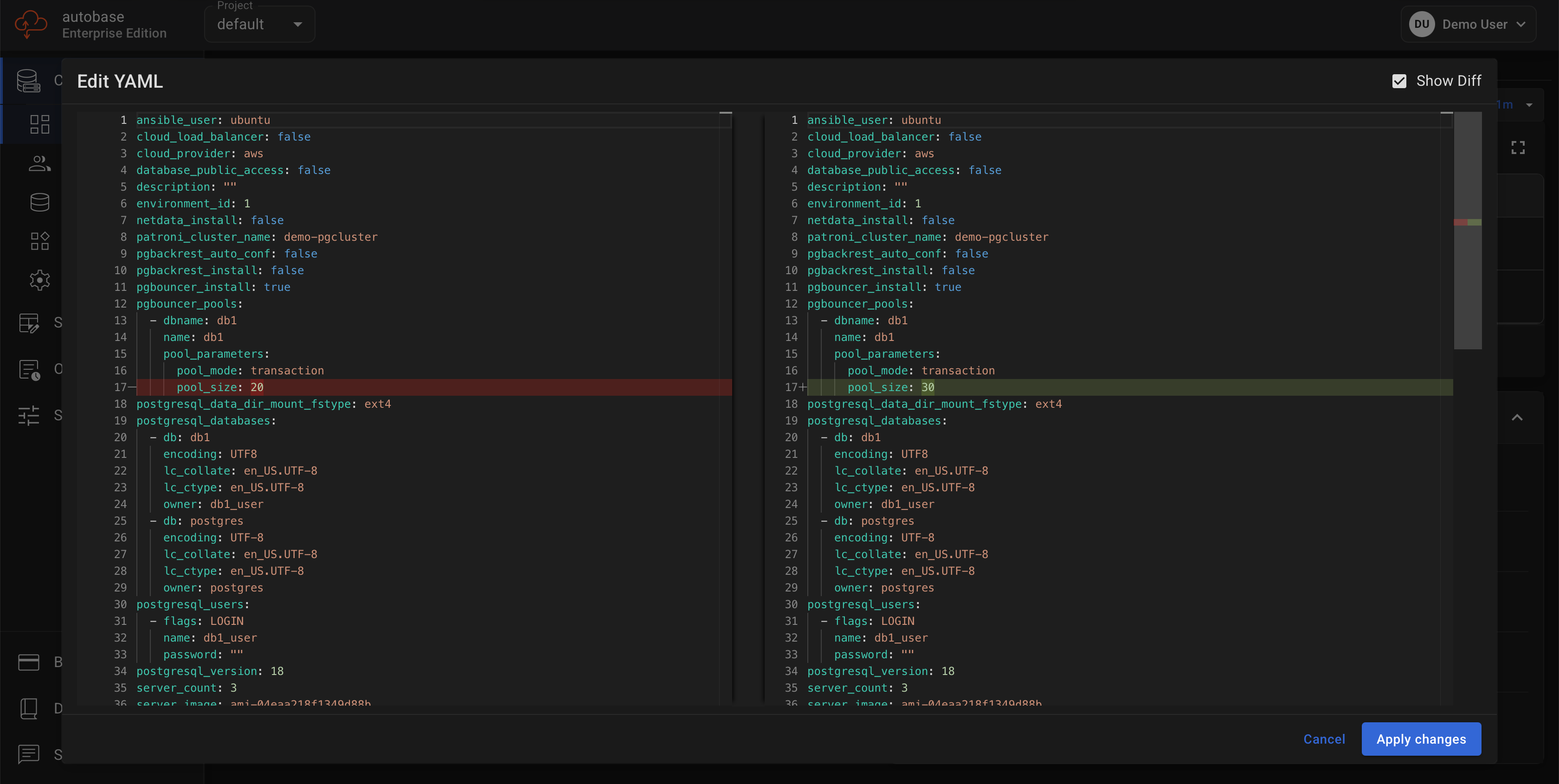
To apply configuration changes:
- Open the cluster.
- Click the YAML icon in the top-right corner of the cluster page.
- Update the required options.
- Select Show Diff to review the changes.
- Click Apply changes to apply the configuration.
To change the cluster configuration using the automation image:
- Modify the desired parameters (for example,
postgresql_parameters).
Refer to the default values; override them as needed using group_vars, host_vars, or directly in the inventory file.
- Run the
config_pgcluster.ymlplaybook to apply the changes.
Example:
docker run --rm -it \
  -e ANSIBLE_SSH_ARGS="-F none" \
  -e ANSIBLE_INVENTORY=/project/inventory \
  -v $PWD:/project \
  -v $HOME/.ssh:/root/.ssh \
  autobase/automation:2.11.0 \
    ansible-playbook config_pgcluster.yml
Optionally, set pending_restart: true to automatically restart PostgreSQL if the parameter change requires a restart.
You can use GitOps and CI/CD pipelines to manage PostgreSQL configuration in a fully automated and reproducible way.